
Fuel monitoring
Prime Fuel Telematics
Find out where the fuel actually goes
- Capacitive tank sensors
- In-line flow meters
- Theft alerts
- Consumption reporting
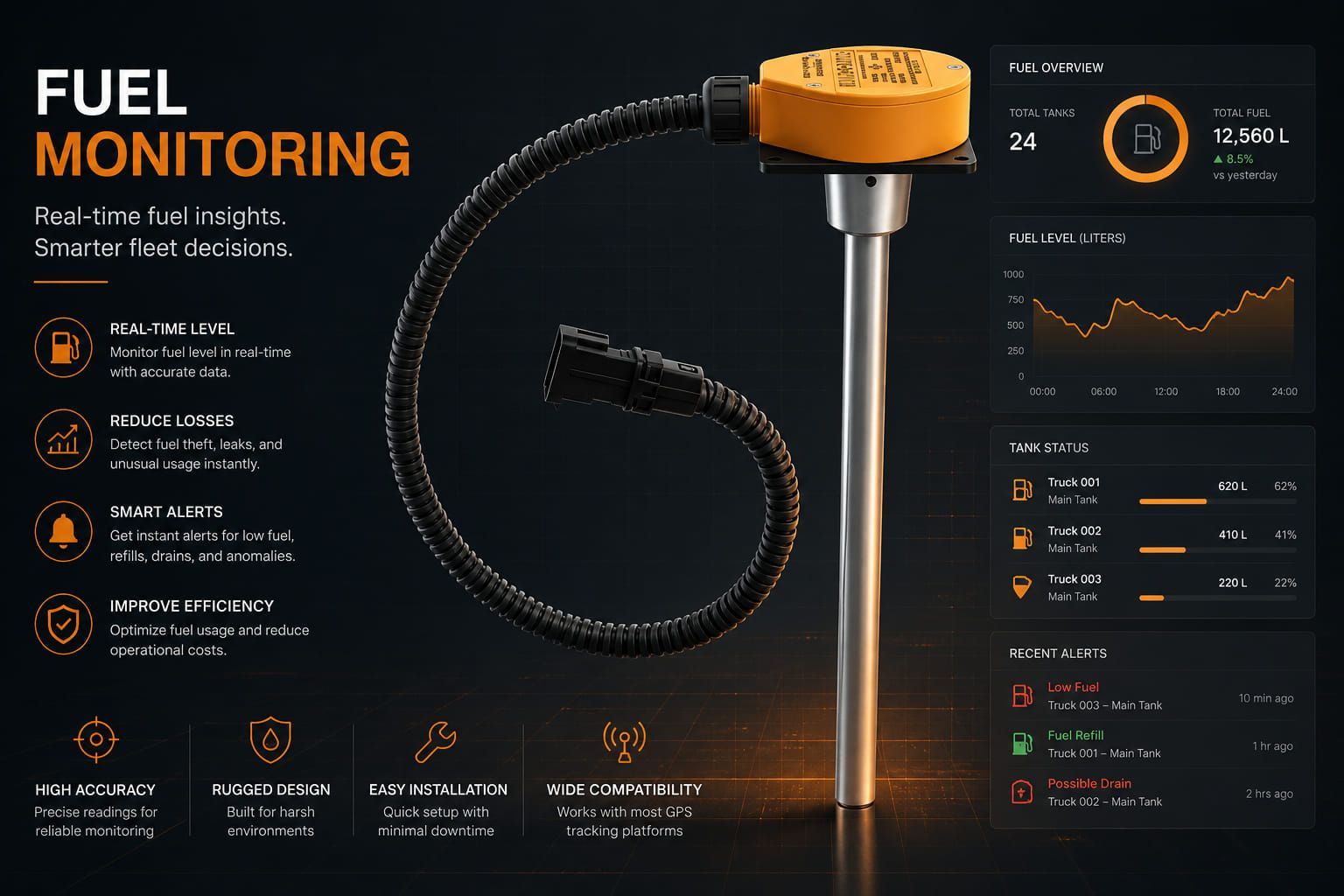
Capacitive tank sensors and in-line flow meters measure real consumption, so siphoning shows up as an alert rather than as an unexplained gap in the month's figures.
Fuel is one of the few fleet costs you can change quickly, which is why we treat consumption as a core KPI rather than a line item. Our system combines proprietary software with GPS and telematics hardware to show where fuel is going and what to do about it.
What it does
01
How the measurement works
The fuel tracking hardware is built on IoT sensors working alongside GPS. Three components do the work:
- Fuel level sensors. Highly accurate capacitive sensors installed in the fuel tank, able to detect small changes in level.
- Fuel flow meters. Fitted along the fuel line to monitor the rate of consumption and give real-time usage data.
- Telematics control unit. The brain of the system, collecting data from the sensors and meters, processing it, and transmitting it to our cloud platform over GSM or GPRS.
02
What you see day to day
- Real-time monitoring. Fuel levels and consumption rates update live on the web and mobile platforms.
- Fuel theft detection. Unauthorised siphoning and sudden drops in level trigger an immediate alert by SMS, email or in-app notification.
- Consumption analysis. Detailed reports on usage, trends and anomalies, which feed into route planning, driver coaching and procurement decisions.
03
Turning the numbers into savings
Fuel consumption has a direct effect on profitability, so the reporting is built to be acted on. Usage trends over time reveal patterns and inefficiencies, and the system flags non-conformities such as excessive idling, speeding and wasteful driving. With that in hand you can put specific corrections in place instead of guessing at where the waste sits.
Interested in fuel tracking?
Send us your fleet size and the vehicles involved. We will explain what the sensors can and cannot measure on each one.