
Fleet analytics
Fleet Analytics
Fifteen ways to read your fleet
The reporting layer across every PrimeTrack device, grouped by the question you are actually asking.
Fleet analytics is what turns vehicle tracking from a live map into a management tool.
15Fleet Analytics
01
Where is it, and where has it been?
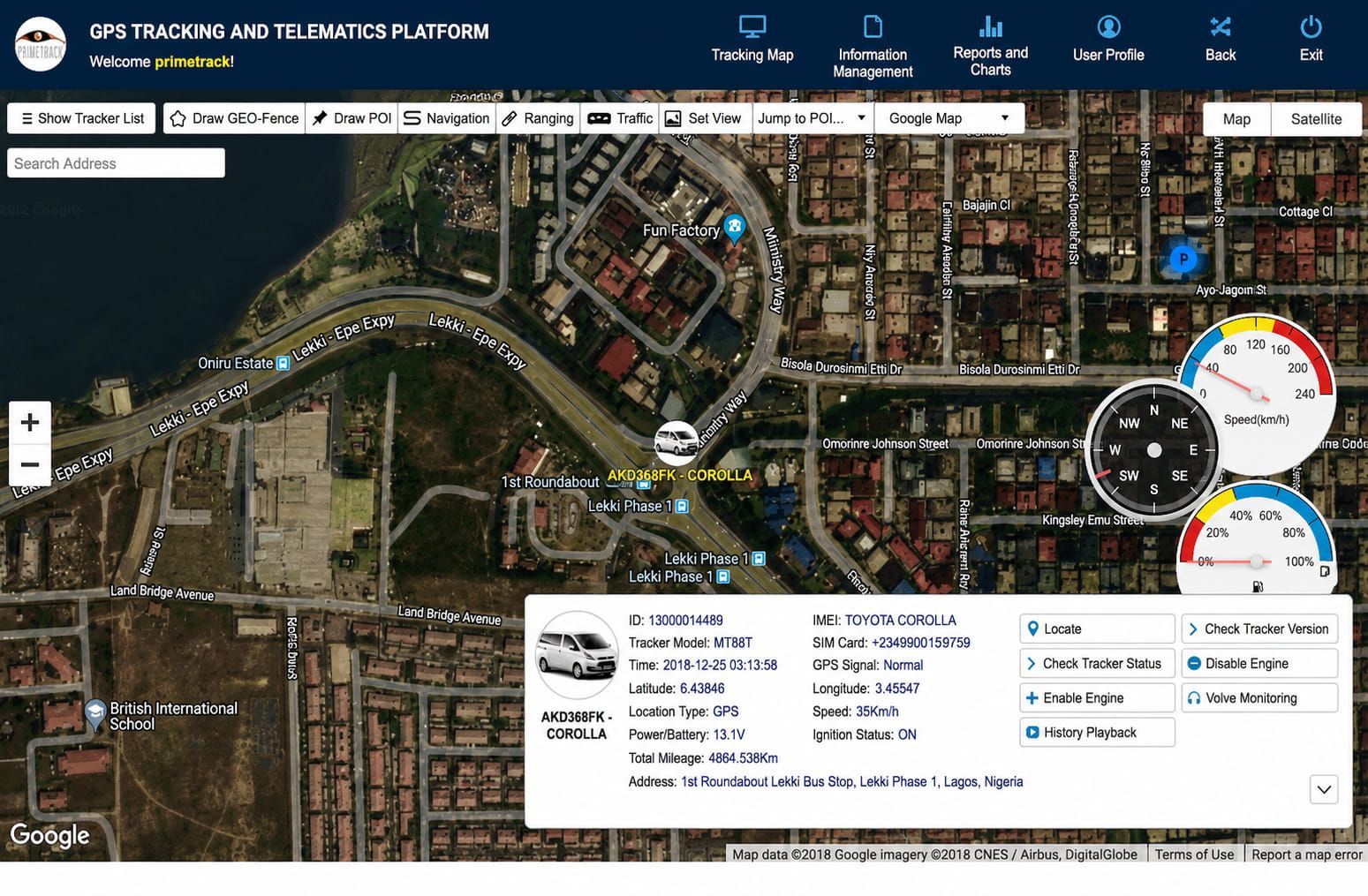
Real-time tracking
Live updates on vehicle locations, so you can make decisions and respond to emergencies while they are still unfolding.
History playback
Replay past routes and locations to evaluate performance, review a disputed trip, and plan better ones.
Geofencing
Virtual boundaries around specific areas, with instant alerts when a vehicle enters or leaves. It deters unauthorised use and keeps drivers on agreed routes.
Route optimisation analysis
Historical route data and traffic patterns analysed to find more efficient routes, cutting both fuel use and travel time.
02
What is it costing to run?
Fuel monitoring
Fuel levels and consumption patterns across the fleet, which is how anomalies, possible theft and poor refuelling schedules become visible.
Idling detection
Unnecessary engine idling identified and reported. Idling burns fuel, adds emissions and wears the engine for no distance covered.
Asset utilisation reports
Usage tracked across the fleet so underused vehicles and equipment show up, which is usually where the easiest savings are.
Turnaround time reporting
Trip durations calculated so delivery timelines can be planned on evidence, deadlines met, and logistics tightened.
03
Is it being driven safely?
Speed monitoring
Vehicle speeds in real time, plus a record of speeding incidents. Safer speeds also mean better fuel figures and lower maintenance costs.
Driver behaviour monitoring
Harsh acceleration, braking and cornering measured per driver, which gives coaching something specific to work from.
Video telematics
Footage from inside and outside the vehicle, useful for accident investigation, driver coaching and insurance claims, and a deterrent in its own right.
Emergency notification (SOS)
Immediate alerts when a driver triggers an SOS, so a response can start straight away.
Incident reporting and alerts
Instant notification of accidents, breakdowns and other critical events, so disruption is contained rather than discovered later.
04
What needs attention next?
Maintenance alerts
Proactive notifications for scheduled maintenance, vehicle diagnostics and service reminders, which is how you avoid the breakdown rather than react to it.
Temperature monitoring
Temperature levels in refrigerated vehicles and cargo compartments, protecting temperature-sensitive loads and the compliance record that goes with them.
Put the reporting to work
Tell us which of these questions your current system cannot answer and we will show you how ours does.